

The guy on the train
A reflection on history, outside the spotlight.

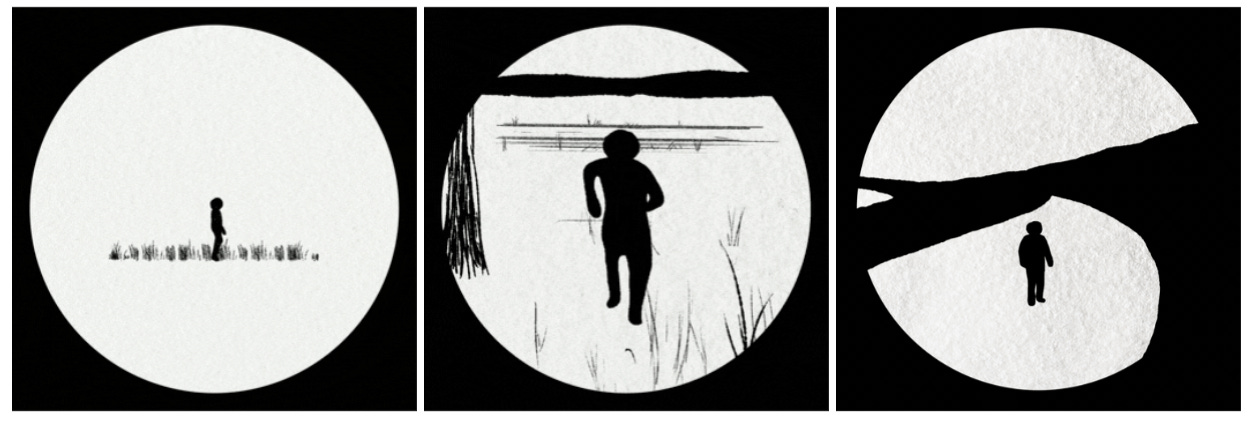
“I ran and I ran, until I made it to the train tracks.”
My friend’s grandpa spoke through the screen. I know all grandmas and grandpas are cute, but he was really cute. He had this perfectly-round face and dimples, the same dimples Sophie has. His eyes are warm, like he knows a delightful secret, and they’re also pleading and honest. He wore oval glasses and a smile on his face.
I remember when he came to speak to us in middle school. We sat inside on these gray, makeshift bleachers and listened to him recount stories from being a teenager. We were on the edge of our seats as he told us his lessons from being a psychoanalyst. He was extraordinary, and by the look of adoration in Sophie’s eyes, he was not only her hero but her friend.
Ten years later, as a couple of twenty-something-year-olds trying to navigate life in the real world, Sophie and I sat in a bar in the Lower East Side. We were having one of our usual deep conversations. She told me she dreamt of making a documentary film about her grandpa. She had wanted to be an actress ever since I had known her, but while studying acting in college, she let her heart remain just open enough to hear her own whisper, that her truest passion was actually directing.
Years later, when I sat on the couch with my friend Colleen at a watch party of two, I was thrilled. Sophie had really done it. She had traveled to get the footage, she had raised enough money, and she had done it.
“I ran and I ran, until I made it to the train tracks.”
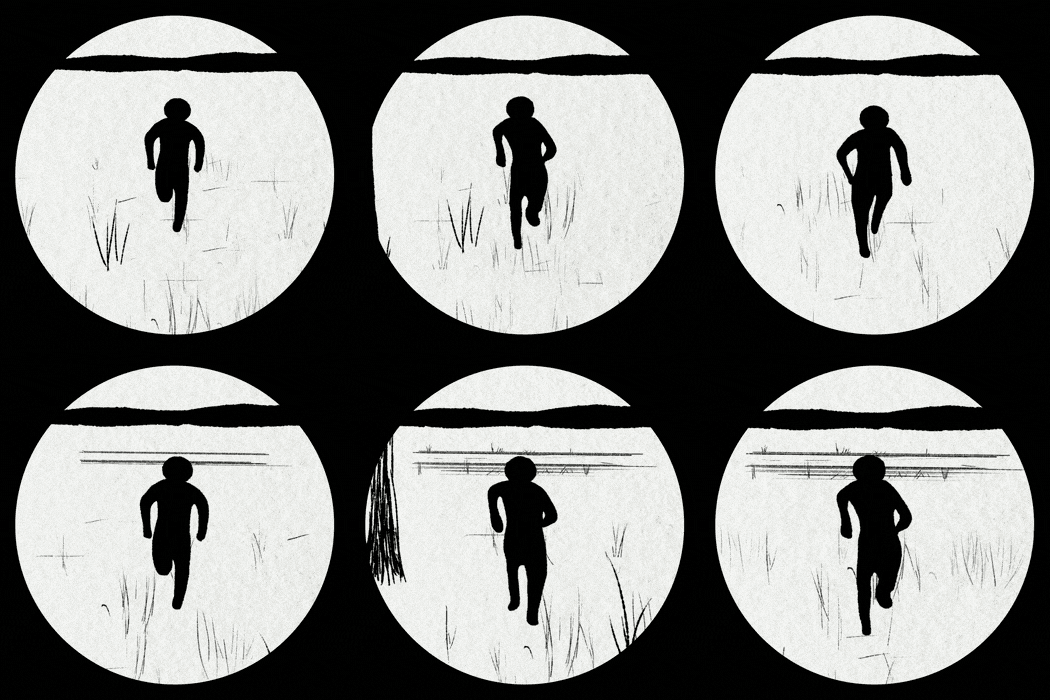
Zaida (Yiddish for grandpa) was twelve at the time. He tells the interviewer that after running for his life and onto the train, he catches his breath, likely still in disbelief from his escape. He describes a man sitting on the train who turns around and spots him. Zaida says he thinks the man knew where he was coming from. I think the man buys him a meal.
I can’t remember the other fine details today, only that at twelve years old, Zaida managed to escape a Holocaust concentration camp, forced to separate from his mother. I know he eventually made his way to the U.S., but the middle is a blur.
The reason I can’t remember more is because while I watched, one thing stayed with me while another gnawed at me. I was so proud of Sophie. She honored her grandpa while he was still alive and preserved his stories. He even got the chance to watch the documentary and see himself through her eyes. But a question bothered me: Wait, where was the guy going on the train? People were just… taking trains? For months, this guy would pop up in my head. There were people with places to go? I spoke with Sophie about it. I think she told me he was likely on a work trip or skiing.
People were going to work or skiing, during the Holocaust.
Is my shock naive or embarrassing? Maybe. But I genuinely imagined the world stopping when the Holocaust happened. You have to understand that inside of me, there’s also a kid who learned history from the adults I looked up to and believed. And we learned history in silos. When we learned one aspect of history, it was like a stage light turned on and highlighted that part, while the rest of the stage went black. Nothing else existed. They told me about Germany and the countries that sided with them. I read stories of victims like Anne Frank and the people who sided with her. No one ever told me about the guys on trains on their way to work or to ski. Those people aren’t a significant part of the story; they’re covered by the darkness on the stage.
Yet it was all I could think about.
I felt ashamed at how many times I have been the guy on the train. I reflected, what is going on in the world right now as I sit on the subway on my way to work? I felt angry, wanting to yell at the guys on the train to stop going to work, to stop. There are twelve-year-olds dying.
In history, we hear from the winners, and if we are lucky, we hear from the losers—but usually only if the losers become winners later. I want to hear about the guys on the train. I want to hear what they cared about. Maybe he didn’t think this was his problem because it wasn’t affecting his people. Maybe he was on his way to fight his own fight, protesting his own issues. Was he too depleted to see the intersectionality between what was happening outside the window and his own people’s problems? Or maybe he was an anti-Holocaust activist, taking a much-needed day off to feel joy and to remember why it all matters.
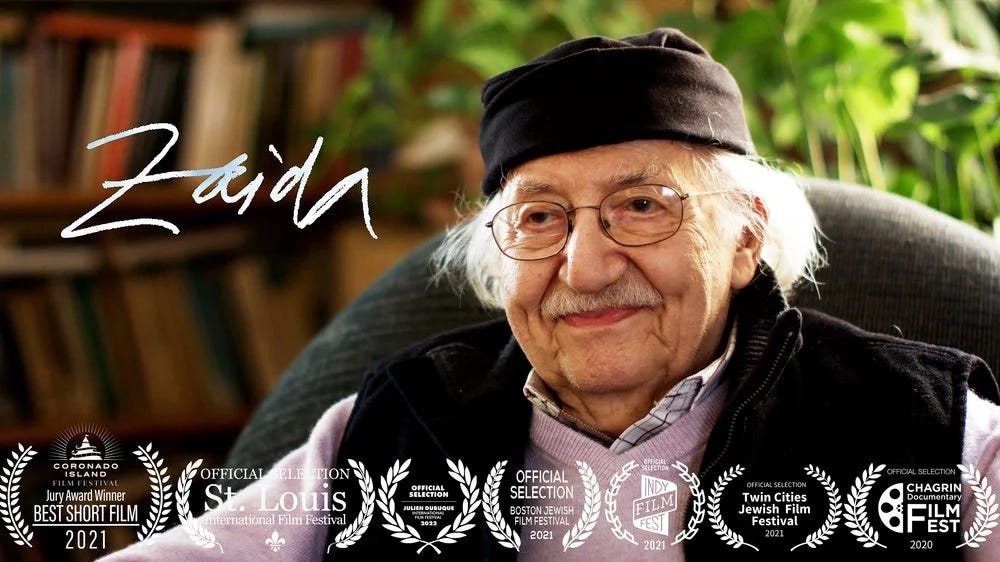
Animations by Zachary Antell; Dialogue from the documentary is paraphrased for this first iteration of this essay.
About the Author: Veronica is a hybrid storyteller and software engineer who weaves words, tech, dance and art to tell stories. As a proud Black woman and the daughter of Dominican immigrants, she brings a vital, intersectional perspective to her work. Veronica's stories have been featured in publications like The Acentos Review, Ranger Magazine and The Latinx Poetry Project. She’s an active contributor to the Dominican Writers Association and is the author of a newsletter 'To Get To the Mango Tree,' which reaches hundreds of readers. Veronica makes art for her ancestors who couldn't walk down that road and especially... for those who couldn't even see the creative path.
Thank you for writing this Vero. Beautiful, honest, and thought-provoking.
Wowwww! Most of the world is in the darkness of the stage. Most! Great read